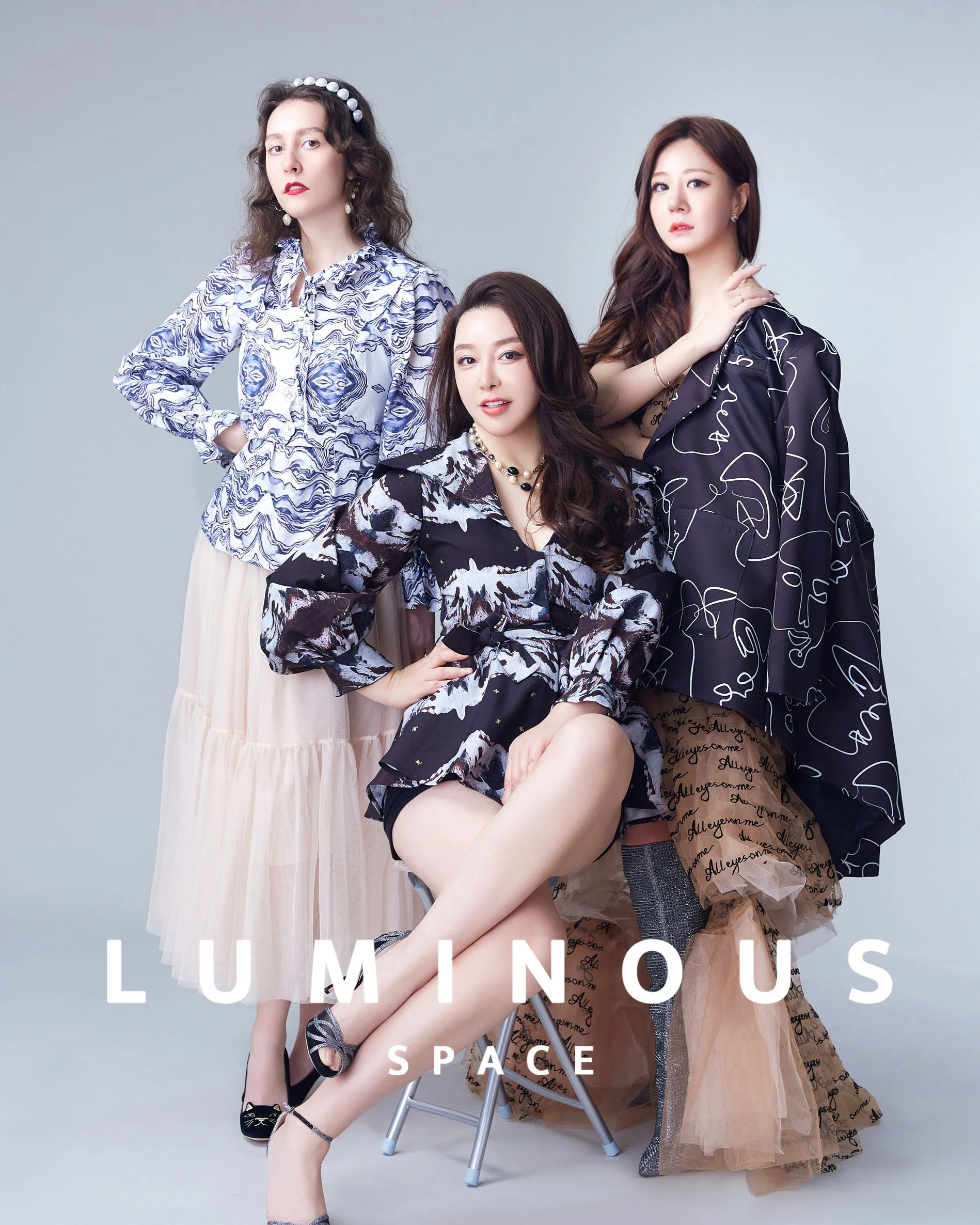

How to Pose for Professional Headshots: A Photographer's Honest Guide
Here's the truth about headshot posing: almost nobody knows how to do it naturally. Not CEOs, not actors, not people who've been photographed a hundred times. The second a camera points at someone, their body tenses, their smile locks up, and they turn into a version of themselves that doesn't look like anyone they know.
That's normal. And it's fixable.
A good headshot photographer directs every detail — your angle, your chin, your shoulders, your hands, your eyes, the intensity of your smile. You shouldn't have to figure this out on your own. But understanding what makes a headshot work helps you show up more relaxed, respond to direction faster, and walk away with photos you actually like.
Here's what we tell every client who sits down in our studio.
Your Body Angle Changes Everything
Most people face the camera straight on. It's the instinct — someone points a lens at you, you face it square. But a straight-on body position does two things you don't want: it makes your shoulders look wider than they are, and it flattens everything into a two-dimensional plane.
Instead, turn your body about 30–45 degrees away from the camera. Either direction — whichever feels more natural. This does three things at once. It narrows the shoulders visually. It creates depth by putting one shoulder closer to the camera than the other. And it gives the image a slight sense of movement, which reads as relaxed rather than stiff.
Your face still turns back toward the camera. It's the body that angles away. Think of it like this: if the camera is at 12 o'clock, your feet and torso point toward 10 or 2. Your eyes come back to 12.
This is the single most impactful adjustment you can make, and it takes about two seconds.
The Chin: Forward and Slightly Down
Nobody in the history of photography has ever complained about a double chin they didn't actually have — except in a photo. The reason is jaw definition. When your chin is in a neutral resting position, gravity pulls the skin under your jaw just enough to soften the jawline. On camera, which flattens three dimensions into two, that softening reads as heaviness.
The fix is to push your chin forward toward the camera — not dramatically, just an inch or so — and tilt it down very slightly. Photographers sometimes describe this as "turtling" forward. It feels odd when you do it, but on camera, it sharpens the jawline and creates a clear separation between your face and your neck.
The mistake to avoid: tilting your chin up. Looking down the camera from above makes you appear arrogant or disconnected. Looking slightly forward and down reads as engaged and confident.
What to Do With Your Eyes
Eyes are the most important part of a headshot. They're where the viewer looks first and where they decide whether they trust you, like you, or want to work with you.
Two things matter: where you're looking and how much intensity you bring.
For most professional headshots, look directly at the lens. Not at the photographer, not at the wall behind the camera — at the lens itself. This creates the feeling of direct eye contact with whoever later looks at the photo. It's the closest a photo gets to simulating a real human connection.
The intensity question is subtler. A completely relaxed expression with soft eyes reads as warm and approachable — great for therapists, coaches, and anyone in a trust-based profession. A slightly more focused expression with engaged eyes reads as sharp and competent — better for executives, lawyers, and anyone who wants to project authority.
Neither is better. It depends on who's looking at the photo and what you want them to feel.
One thing to watch for: squinting. When people try to look "intense," they often squint. Squinting makes eyes look smaller and the expression look suspicious. Instead of squinting, think about engaging the muscles around the brow very slightly — lifting rather than tightening. Your photographer should catch this and redirect you if it's happening.
The Smile Spectrum
Smiling in headshots is more nuanced than you'd think. There isn't a single "right" smile — there's a spectrum, and where you land on it depends on your industry, your personality, and how you want to come across.
At one end: no smile, just a neutral expression with a hint of warmth in the eyes. This reads as serious, confident, editorial. Common in legal, finance, fashion, and high-level corporate contexts.
In the middle: a closed-mouth smile. Lips together, corners up slightly. This reads as friendly but composed. Works for almost everyone in almost every context. It's the safest choice if you're unsure.
At the other end: a full smile with teeth showing. This reads as warm, energetic, and approachable. Ideal for people who work directly with people — realtors, coaches, consultants, customer-facing roles.
The most important thing about any smile is that it reaches the eyes. A mouth that's smiling while the eyes are flat looks forced — and everyone can see it. If you're not genuinely feeling it, your photographer should be cracking jokes, asking you questions, or doing whatever it takes to get a real reaction. The best headshot smiles are reactions, not poses.
Shoulders: Drop Them
You probably don't realize your shoulders are up around your ears right now. Most people carry tension there, and it gets worse under the pressure of being photographed.
Consciously drop your shoulders before each shot. Roll them back once, then let them settle. The difference on camera is significant — dropped shoulders make you look relaxed, confident, and open. Raised shoulders make you look anxious or cold.
If your photographer sees your shoulders creeping up during the session, they'll remind you. It's one of the most common corrections we make, and we might say it ten times in a single shoot. That's fine. It doesn't mean you're doing it wrong. It means you're human.
Hands: The Invisible Problem
Hands don't usually appear in a standard headshot crop, but if you're doing a half-body or three-quarter shot, they become relevant fast.
Hands hanging at your sides look lifeless. Hands in pockets look too casual for most professional contexts. Hands on hips can look aggressive. Hands clasped in front can look nervous.
What works: one hand lightly touching a sleeve or lapel. Arms crossed loosely (not tightly — there's a difference). One hand in a pocket with the thumb out. A hand resting on a surface if there's a table or ledge in frame.
The principle is simple: give your hands something to do that looks intentional but not posed. Your photographer will direct this — it's not something you need to practice in a mirror.
The Head Tilt Question
A slight head tilt can add personality and warmth to a headshot. But the direction and degree matter more than people realize.
Tilting toward your higher shoulder (the one closer to the camera) tends to look friendly and approachable. Tilting toward your lower shoulder tends to look more authoritative and confident. No tilt at all reads as neutral and direct.
Over-tilting in either direction looks awkward. We're talking about 5–10 degrees — barely noticeable to you, clearly visible in the photo. Your photographer will find the angle that works for your face shape and adjust it in real time.
Standing vs. Sitting
Both work. The choice depends on the feel you're going for and the crop of the final image.
Standing headshots tend to feel more energetic and professional. They allow for easier body angling and a wider range of cropping options.
Seated headshots feel more intimate and relaxed. They're great for environmental portraits, therapist profiles, and situations where warmth matters more than formality. Sitting also naturally relaxes the shoulders for people who carry a lot of tension when standing.
If your photographer offers both, try both. You might be surprised which one you prefer when you see the results side by side.
What to Do Between Shots
The moments between directed shots are often where the best photos happen. When you think the camera isn't firing, your face relaxes, your body settles, and something genuine shows up that wasn't there during the posed shots.
Good photographers know this and shoot constantly — even when they're "reviewing the screen" or "adjusting the light." Some of the best headshots we deliver are the ones our clients don't even realize we took.
So between shots: breathe, look away for a second, shake out your hands, look back. That transition from relaxation to attention often produces the most natural expression of the entire session.
The Biggest Mistake: Trying to Control the Outcome
The clients who get the worst headshots are the ones who come in with a rigid idea of what they should look like. They've practiced a smile in the mirror. They've picked an angle. They've decided what their "good side" is. And when the session starts, they perform that version of themselves for every single frame.
The result looks stiff, rehearsed, and slightly off. Like a person trying very hard to look natural, which is the exact opposite of looking natural.
The clients who get the best headshots are the ones who show up, let the photographer direct them, and stay responsive rather than controlled. They don't try to hold a face. They let the face move. They trust the photographer to catch the right moment — because that's literally what we're trained to do.
You don't need to know how to pose. You need to show up, be present, and let someone who does this every day guide you through it.
Quick Reference: The Five Things That Matter Most
If you remember nothing else from this guide, remember these five things:
Angle your body 30–45 degrees away from the camera. Straight-on is almost never the best angle.
Push your chin forward and slightly down. It defines your jawline and makes you look more engaged.
Drop your shoulders. Then drop them again. They're still up.
Let your smile reach your eyes. If it doesn't feel real, it doesn't look real.
Trust your photographer. The best headshot is one where you stopped performing and started being present.
Luminous Space is a professional headshot photography studio in San Mateo, California. We direct every aspect of your posing, expression, and body language so you never have to guess. Book your headshot session →